
 DraftRight
Writing for the Future Reader: Why Good Documentation Ages Well

Writing for the Future Reader: Why Good Documentation Ages Well
Most documentation is written for the present.
- For the current release.
- For the current team.
- For the current understanding of the system.
But documentation is rarely used in the present. It is read later - often much later - by someone who was not part of the original discussion, design decisions, or trade-offs. That person is the future reader. And most documentation is not written for them.
The Future Reader Is the Real Audience
When documentation is created, the writer usually has full context:
- Why the system exists
- What constraints shaped it
- Which alternatives were rejected
- What problems it is meant to solve
The reader rarely has that context.
The future reader might be:
- A new team member
- An engineer onboarding months later
- A support engineer troubleshooting an issue
- Even the original author, returning after time has passed
Good documentation assumes this gap exists. Poor documentation ignores it.
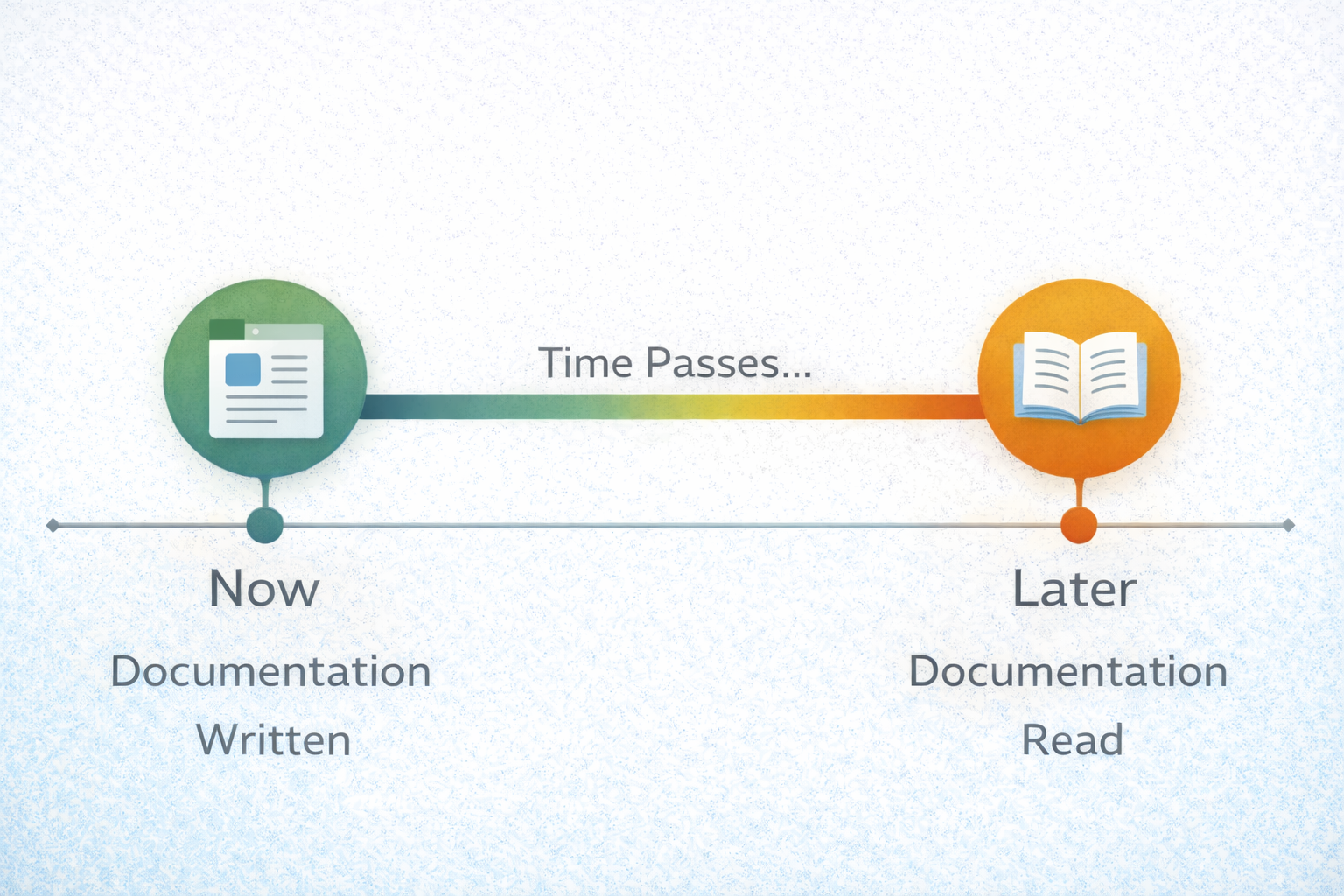 Timeline showing documentation written now but read later
What Disappears Over Time
As time passes, important context quietly vanishes.
Meetings are forgotten.
Slack messages are archived.
Design discussions are reduced to vague memory.
What usually disappears first:
- Why a decision was made
- What alternatives were considered
- Which constraints mattered at the time
- What was intentionally left out
Documentation that focuses only on what exists becomes fragile as soon as this context fades. Documentation that captures intent remains useful.
Writing That Ages Poorly
Some patterns almost guarantee that documentation will not age well.
Assumed Knowledge
Phrases like:
- “As you already know…”
- “This should be obvious…”
- “The system works as expected…”
These assumptions rarely survive team changes.
Missing Rationale
Explaining how something works without explaining why it exists forces readers to guess. Guessing leads to misuse, workarounds, or unnecessary rewrites.
Over-Specific Detail
Documentation tightly coupled to:
- Tool versions
- Internal naming
- Temporary workflows
…becomes outdated quickly, even if technically accurate at the time.
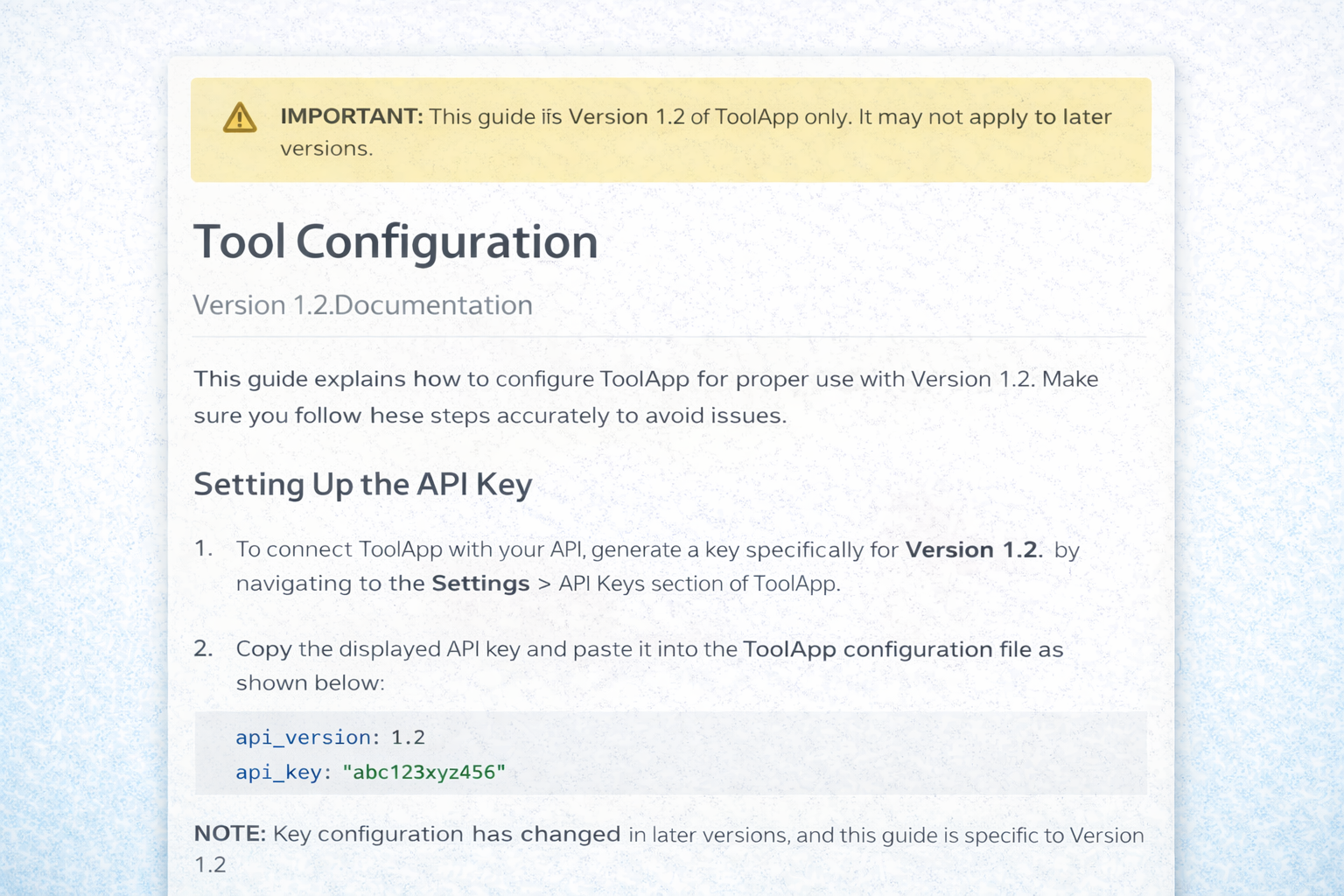 Example of outdated documentation tied to a specific tool version
Writing That Ages Well
Good documentation does not try to predict the future.
Instead, it is written in a way that remains understandable despite change. Here are a few principles that help writing age well.
Start With the Problem, Not the Solution
When documentation begins with the problem being solved, future readers can orient themselves - even if the solution has evolved. Problem statements provide stability when implementations change.
Make Assumptions Explicit
Every system has assumptions.
Good documentation surfaces them:
- What this system expects
- What it does not handle
- What decisions were made intentionally
Explicit assumptions reduce reader guesswork.
Prefer Mental Models Over Mechanics
Details change. Mental models last longer.
Explaining:
- How responsibilities are divided
- Where boundaries exist
- How components relate conceptually
…helps readers understand changes without rereading everything.
Separate Intent From Implementation
Intent answers why. Implementation answers how. When these are clearly separated, future readers can update one without misunderstanding the other.
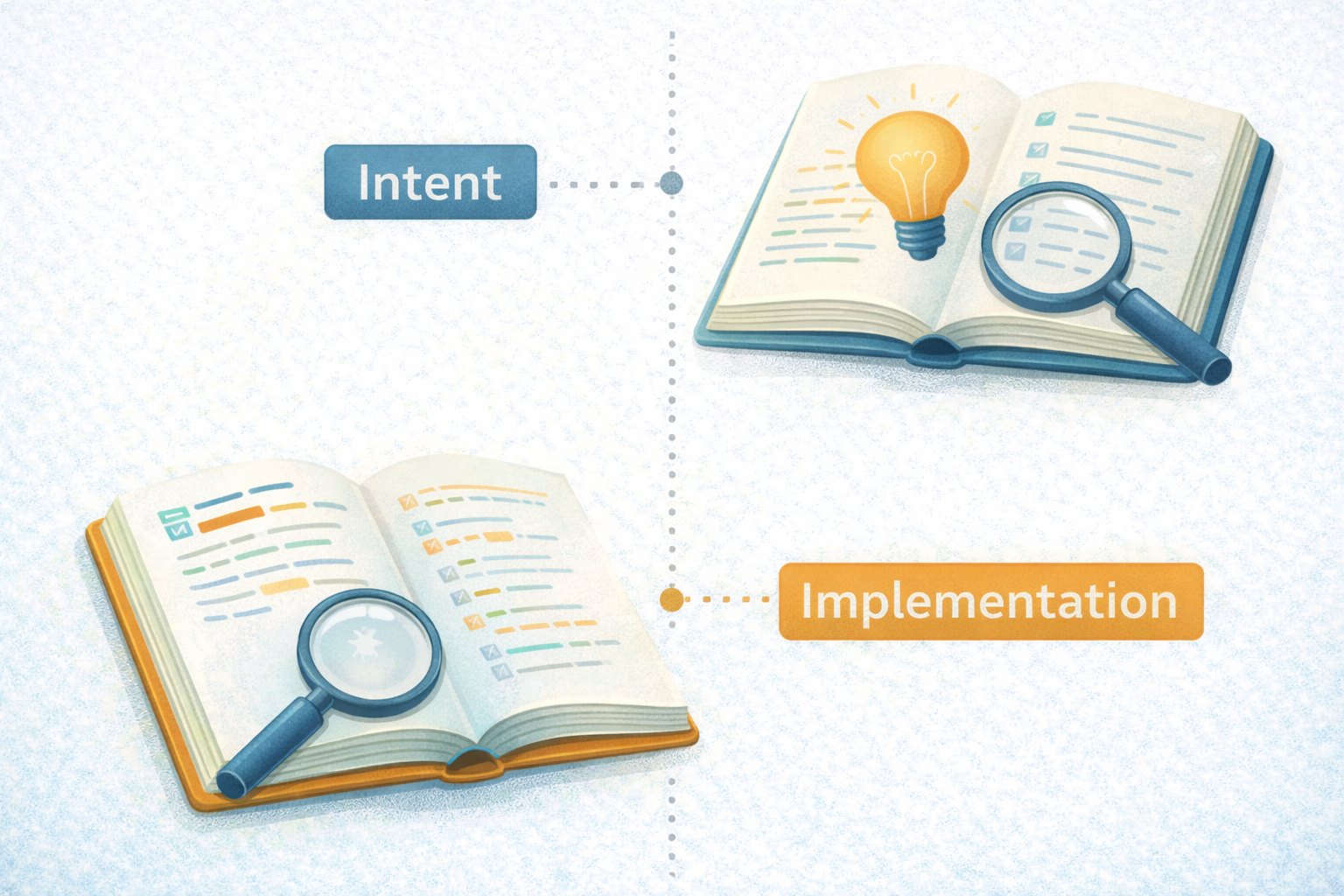 Intent vs implementation layers in documentation
Writing for Someone You Will Never Meet
Writing for the future reader is an act of respect. It acknowledges:
- You won’t always be there to explain
- Context will fade
- Systems will evolve Good documentation reduces the cognitive load on someone you will likely never meet - and that is a professional responsibility.
Documentation as Knowledge Preservation
When written well, documentation becomes:
- A record of reasoning
- A map of decisions
- A guide through complexity
Not just instructions. This is why documentation that ages well often feels thoughtful, not verbose.
Closing Thought
Most documentation is written to be finished. Good documentation is written to be understood later. The difference lies in how much effort we put into preserving intent, context, and clarity - beyond the immediate moment. Writing for the future reader does not take more time. It takes more care.
DraftRefine
Clear thinking. Refined writing.