
 DraftRight
Documentation as a Design Artifact

Documentation as a Design Artifact
In many teams, documentation is treated as a byproduct.
The system is designed.
The feature is built.
The code is merged.
Only then does documentation appear - often hurried, incomplete, and disconnected from the decisions that shaped the system. This approach misunderstands the role documentation can play.
Documentation is not just a record of design.
It is a design artifact.
What Is a Design Artifact?
In engineering and product work, a design artifact is something that:
- Captures intent
- Makes decisions explicit
- Enables review and discussion
- Survives beyond implementation
Examples include:
- Architecture diagrams
- Design proposals
- Interface contracts
- Decision records
These artifacts are not created after design. They are part of the design process. Documentation belongs in this category.
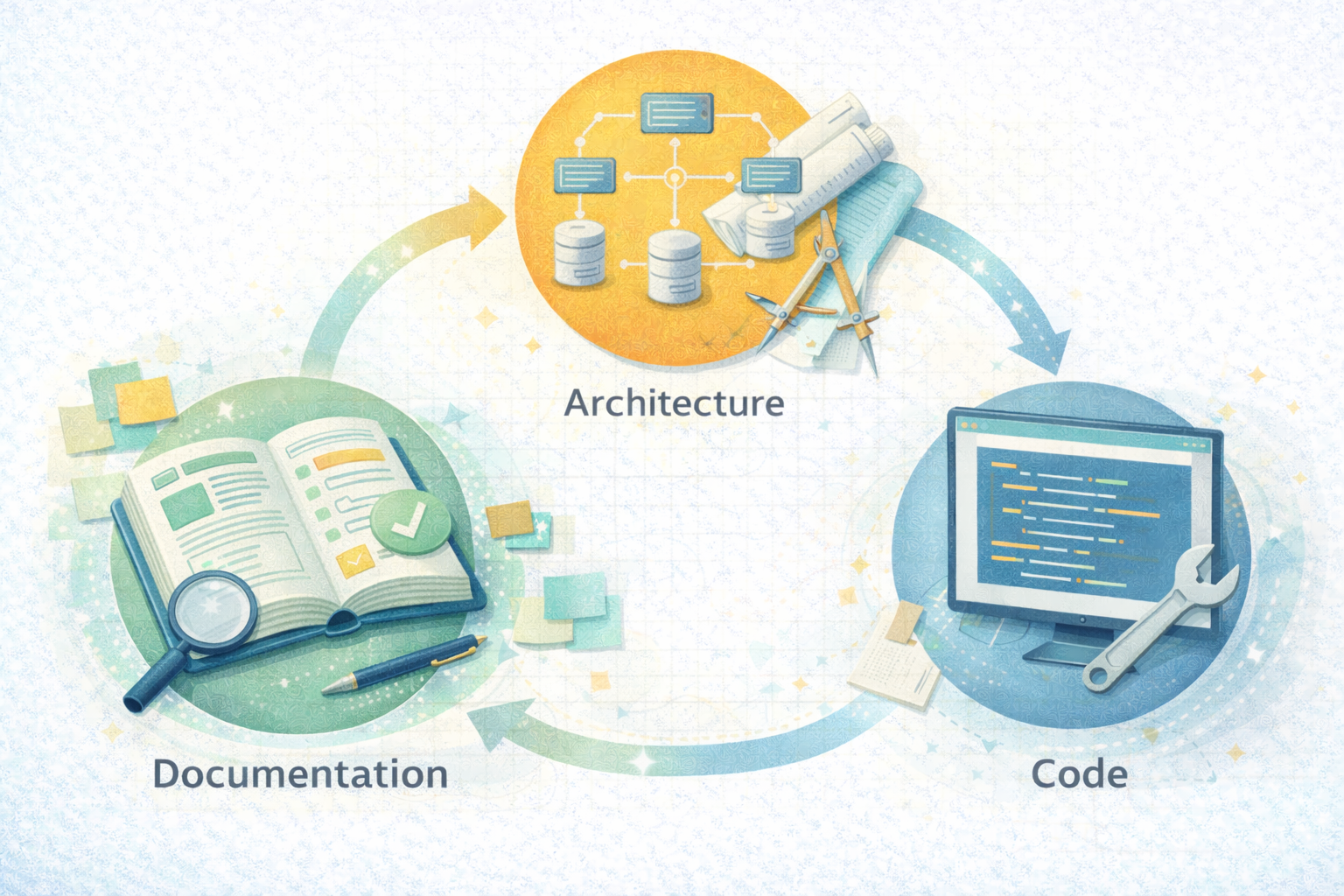 Design process showing documentation alongside architecture and code
The Cost of Treating Documentation as Output
When documentation is created only after implementation, several problems appear immediately.
Decisions Are Already Locked In
At this stage:
- Trade-offs are no longer discussed
- Alternatives are forgotten
- Constraints are accepted without explanation Documentation becomes descriptive, not explanatory.
Gaps Go Unnoticed
If documentation is written late:
- Missing context is harder to recover
- Ambiguities are discovered too late
- Structural flaws are masked by wording By the time issues surface, changing the design feels expensive.
Writing Becomes Defensive
Late-stage documentation often tries to justify decisions rather than clarify them. This results in:
- Overly verbose explanations
- Avoidance of unresolved questions
- Documentation that feels careful - but not clear
Documentation as a Thinking Tool
When documentation is treated as a design artifact, its role changes. Writing is no longer about explaining what already exists. It becomes a way to test the design itself. Good documentation forces answers to questions like:
- What problem are we actually solving?
- Who is this for?
- What assumptions are we making?
- Where are the boundaries?
- What happens when things go wrong? If these questions are hard to answer in writing, the design is likely incomplete.
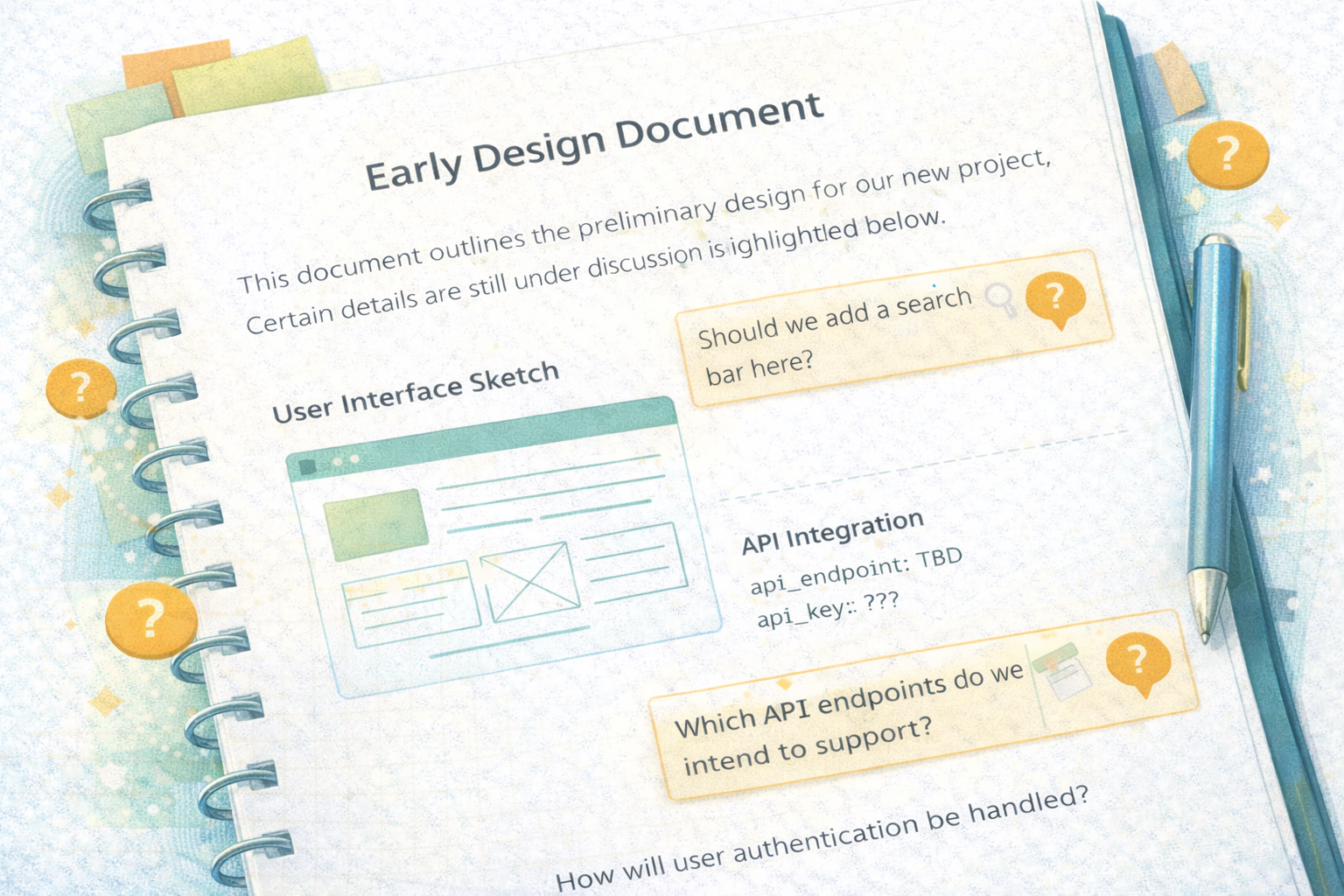 Early design document with open questions highlighted
How Documentation Improves Design Quality
Treating documentation as part of design leads to measurable improvements.
1. Decisions Become Explicit
Writing forces clarity. When design rationale is documented:
- Assumptions surface
- Trade-offs are acknowledged
- Future changes are easier to reason about This reduces accidental complexity.
2. Review Becomes Meaningful
Well-written design documentation allows reviewers to:
- Understand intent, not just mechanics
- Question decisions constructively
- Catch gaps before implementation Code reviews become more effective when design intent is already clear.
3. Alignment Improves Across Roles
Documentation bridges perspectives. Engineers, product managers, and support teams may focus on different concerns, but shared documentation:
- Creates a common mental model
- Reduces misinterpretation
- Prevents duplicated reasoning
What Design-Quality Documentation Looks Like
Documentation that functions as a design artifact has a few recognizable traits.
It Starts With the Problem
Not the feature. Not the implementation. The problem statement anchors everything that follows.
It Separates Intent From Implementation
Intent explains why. Implementation explains how. Keeping these distinct allows systems to evolve without losing meaning.
It Makes Constraints Visible
Good documentation acknowledges:
- Technical limitations
- Business requirements
- Time or resource constraints This context is invaluable to future readers.
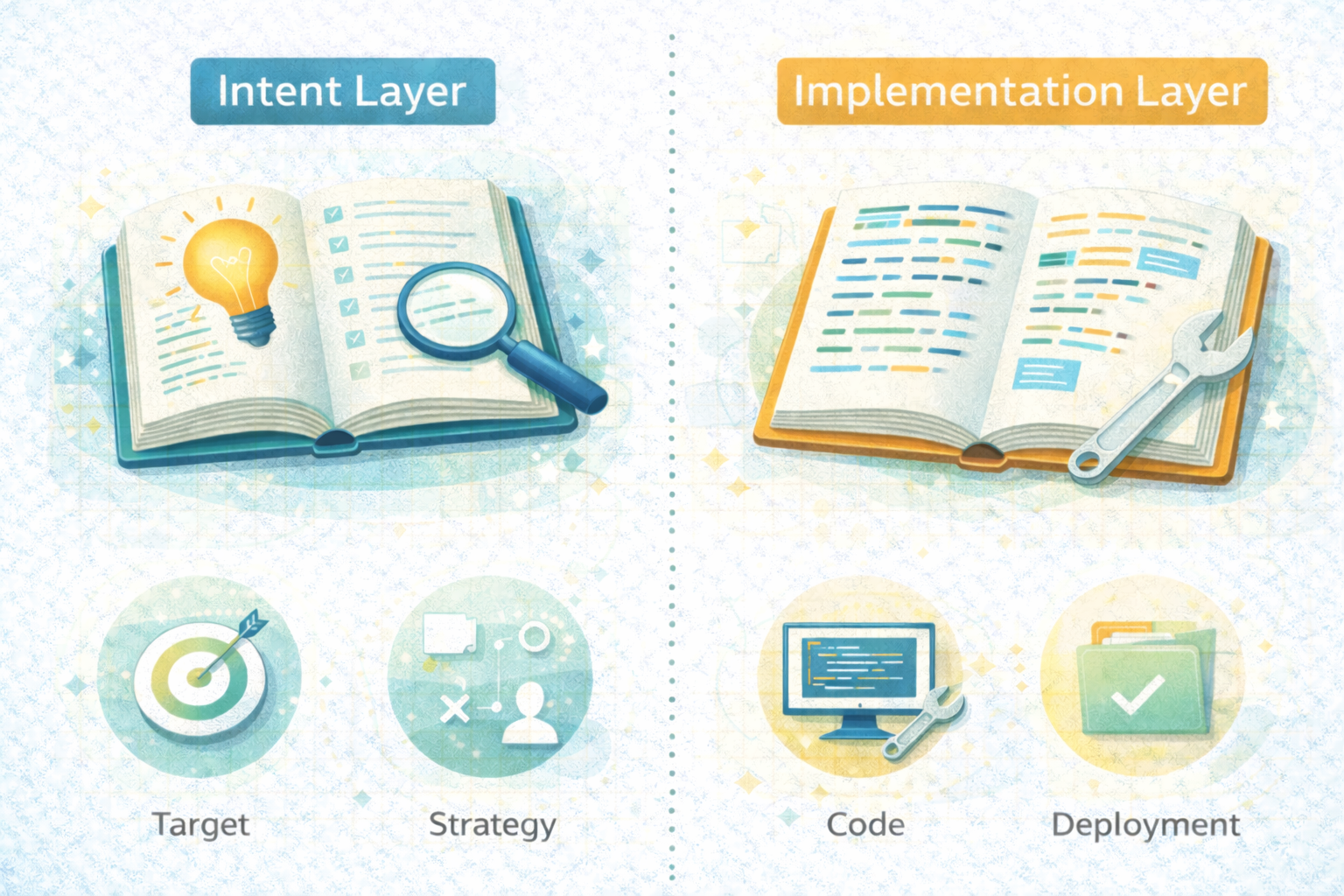 Intent layer vs implementation layer in documentation
Documentation Is Still Writing - But With Purpose
Treating documentation as a design artifact does not mean:
- Writing longer documents
- Formalizing everything
- Creating unnecessary overhead It means writing earlier, more deliberately, and with design intent in mind. The goal is not documentation for its own sake. The goal is better systems.
A Subtle but Important Shift
The shift is not procedural. It is conceptual. From:
“We need to document this.” To: “We need to understand this well enough to document it.” That difference changes how teams think.
Closing Thought
Documentation created after design explains what exists. Documentation created as part of design explains why it exists. Only one of these ages well. If clarity is a design requirement - and it should be - then documentation deserves a seat at the design table.
DraftRefine
Clear thinking. Refined writing.